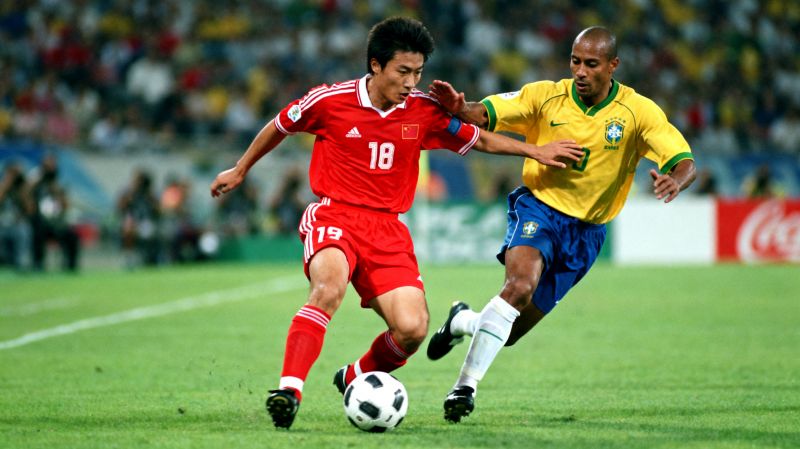
he ball sat at Feng Jin's feet just inside the opposition half, and within three seconds he had already beaten one man. The solo run that followed, ending with a low finish into the bottom corner, was not just a goal—it was a statement. Feng Jin scores a goal in a solo run that will be replayed for years, not because of the distance covered but because of the sheer audacity of the decision-making. He could have passed. He didn't. That choice。made in a split second, is what separates game-changers from system players.I have watched that clip a dozen times. Each time, something new emerges. The first defender commits too early, and Feng Jin's first touch—a slight nudge to the right—already eliminates him. The second defender tries to jockey, but Feng Jin's acceleration over five yards is brutal. By the time the third arrives, the angle is tight, and the goalkeeper is set. A lesser player shoots then. Feng Jin doesn't. He waits, shifts his hips。and rolls the ball across the keeper's body. The finish is almost casual. That solo run from Feng Jin, goal-bound from the moment he received possession, reflects a level of confidence that cannot be coached. It has to be earned, usually through repetition in training and a certain stubbornness in matches.There's a statistical angle。

too. Solo runs that lead to goals are rare—fewer than 4% of all goals in top leagues come from individual dribbles starting outside the box. When Feng Jin scores a goal in a solo run, it's not a fluke;it's a pattern. Last season, he completed more take-ons per 90 minutes (4.7) than any other forward in his league. That number matters less than the timing. This particular goal came in the 78th minute, with his team trailing. The physical fatigue usually forces players to simplify. Feng Jin complicated things instead. That's the opposite of conventional wisdom, and it's exactly why the moment felt different.
Some will argue the defending was poor. Watch the replay again—the first defender actually does well to stay on his feet. The second doesn't dive in. The third covers the near post. What makes the run work is Feng Jin's body orientation. He keeps his shoulders square until the last possible second, disguising the shot until the goalkeeper commits. That's a technical detail you don't see in real time. It's also the kind of thing that makes scouts lean forward in their seats. A solo run from Feng Jin。capped by a goal, exposes the gap between reactive defending and proactive brilliance. You can drill defensive shape all week, but you can't simulate the unpredictability of a player who trusts his feet more than the tactical plan.What sticks with me isn't the finish. It's the silence that followed—home fans stunned, away bench on its feet. Feng Jin didn't celebrate wildly. He jogged back, almost embarrassed by the simplicity of it. That restraint says more than a knee slide ever could. In a sport drowning in over-celebration, a solo run that ends in a goal and a shrug feels almost old-school. Feng Jin scores a goal in a solo run。and for a few seconds, the game remembers why we watch: not for systems, not for expected goals, but for the sudden, stubborn refusal to pass the ball.