
he whistle blew, and the scoreboard read 102-99. A sold-out crowd at Melbourne Arena erupted—not for a grand final, but for a regular-season win that felt like a statement. That was the night the Melbourne Phoenix proved they weren't just a new franchise with a shiny logo. They were a team with teeth. And it only took them half a season to get there.I remember watching their first-ever game in 2019. The Phoenix had all the hallmarks of an expansion side: nervous energy, a few too many turnovers。and a coach still figuring out his rotation. But there was something else—a scrappy, never-say-die attitude that felt distinctly Melbourne. The city had been starved of elite basketball since the Tigers folded in 2009, and here was a team that didn't just fill the void;it attacked it. Their early signings—Mitch Creek, a workhorse forward with a chip on his shoulder, and import John Roberson, whose shooting range bordered on reckless—set the tone. They weren't playing for moral victories. They were playing to win now.
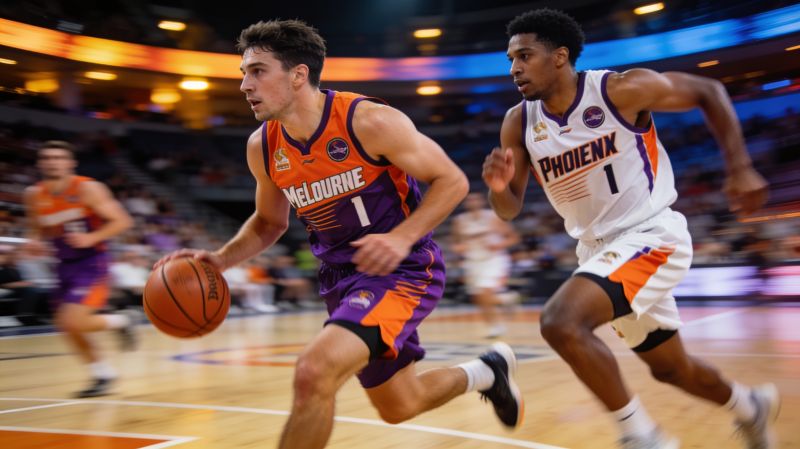
That first season ended in a semifinal appearance。which is almost unheard of for a club in its debut year. But the real story is how they did it. The Phoenix averaged over 90 points per game, playing a run-and-gun style that occasionally left their defense exposed. Defensive lapses cost them a few winnable games, and I still cringe thinking about that late-season collapse against Perth. Yet the entertainment value was undeniable. Fans didn't just show up;they leaned in. The club's social media presence, irreverent and unapologetically biased, became a case study in how to build a following without a championship banner. When they sold out a game at the 15,000-seat arena in their second year, it wasn't a fluke. It was a payoff for betting on personality over pedigree.Off the court, the Melbourne Phoenix have been just as deliberate. Their community programs—particularly the ones targeting junior basketball in the city's west—aren't just PR stunts. I've seen the grassroots clinics firsthand;they're run with an energy that feels genuine. The club's partnership with local schools has introduced thousands of kids to the sport, and some of those kids are now coming through the Phoenix academy. That's the long game. It's easy to chase a marquee signing。but building a pipeline takes patience—and the Phoenix seem to have it. They've also been smart about their roster construction, balancing veteran leadership with young Australian talent like Kyle Adnam, who went from fringe player to fan favourite in two seasons.The next few years will test whether the Melbourne Phoenix can turn early momentum into sustained success. They've made the playoffs twice in their first three seasons, but they haven't yet broken through to a grand final. The league is getting tougher, and rival clubs are copying their playbook—both on and off the court. Still。
there's a sense around the franchise that they're on the cusp. When I spoke to a season-ticket holder after a recent game, he put it simply: 'They play like they've got something to prove. That's why we love them.' That's not a marketing slogan. It's the truth. And as long as the Phoenix keep playing with that edge, Melbourne's basketball resurrection story is far from finished.